
Chimney sweep in Aurora, IL
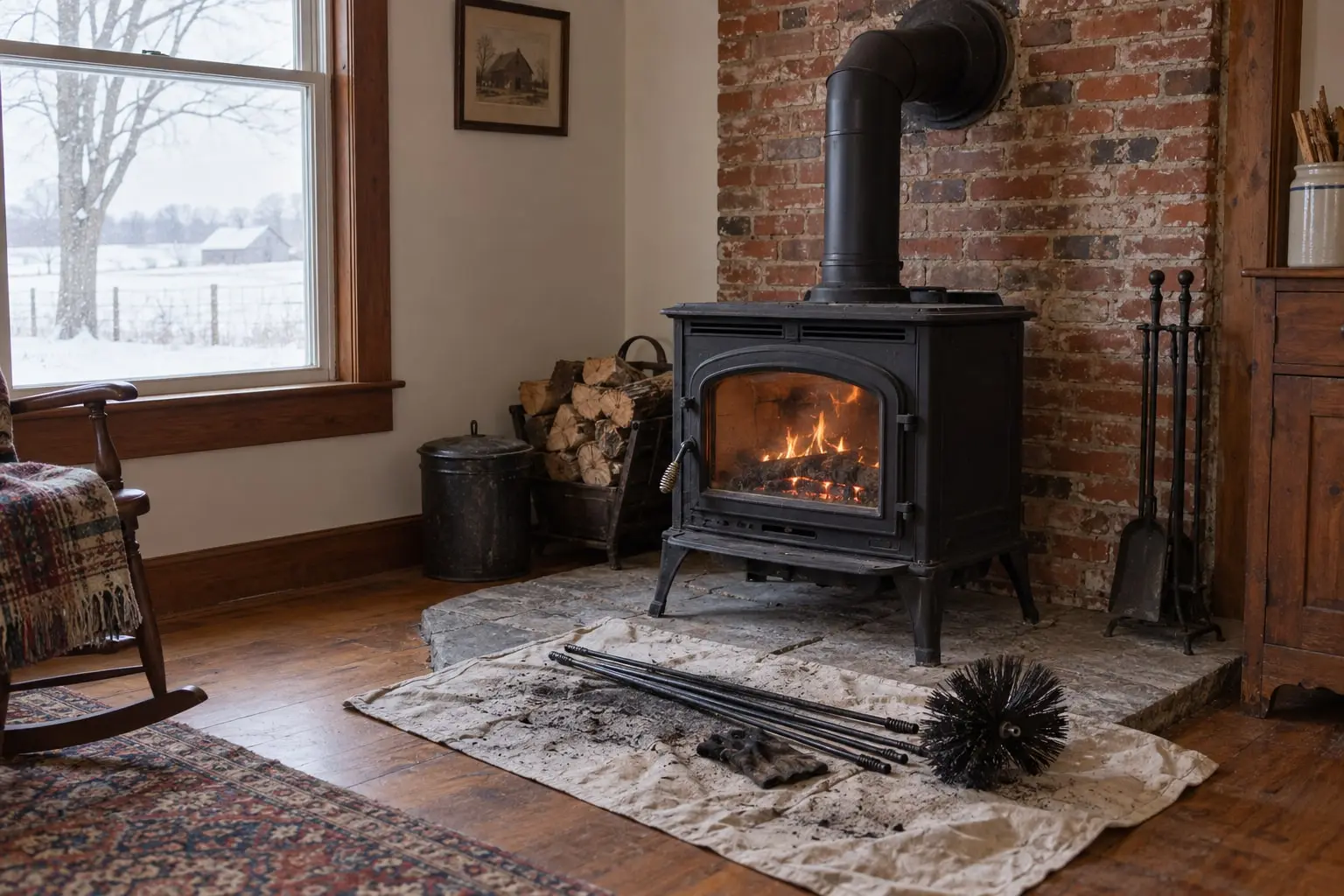
Creosote builds up a little with every fire, and faster in a stove turned down low on a January night. We brush the flue clean from top to bottom, sweep the connector pipe and leave the hearth spotless.
- Fireplaces, stoves and inserts
- Connector pipes included
- Clean hearth when we leave
Is it time for a sweep?
Smoke cools as it rises and leaves creosote on the flue walls: first a dusty soot, then a crusty layer, and finally a shiny glaze that is hard to remove and burns very hot. Wet or freshly split wood, smouldering overnight fires and stoves damped down for long burns all speed it up.
These are the signs that a sweep is due.
- Black flakes or a tar-like coating in the firebox, on the damper or in the stove pipe
- Glass doors on a stove or insert that blacken within a fire or two
- A smoky smell in the room, worse on humid days
- Smoke that spills into the room when the fire is lit
- A fire that is hard to start or will not burn hot
- Soot streaks around the top of the flue or on the cap
- A year or more since the last sweep
What you get with Chimney sweep
Fire stays in the firebox
Creosote is the fuel of a chimney fire. A swept flue has nothing on its walls to catch.
A cleaner, hotter burn
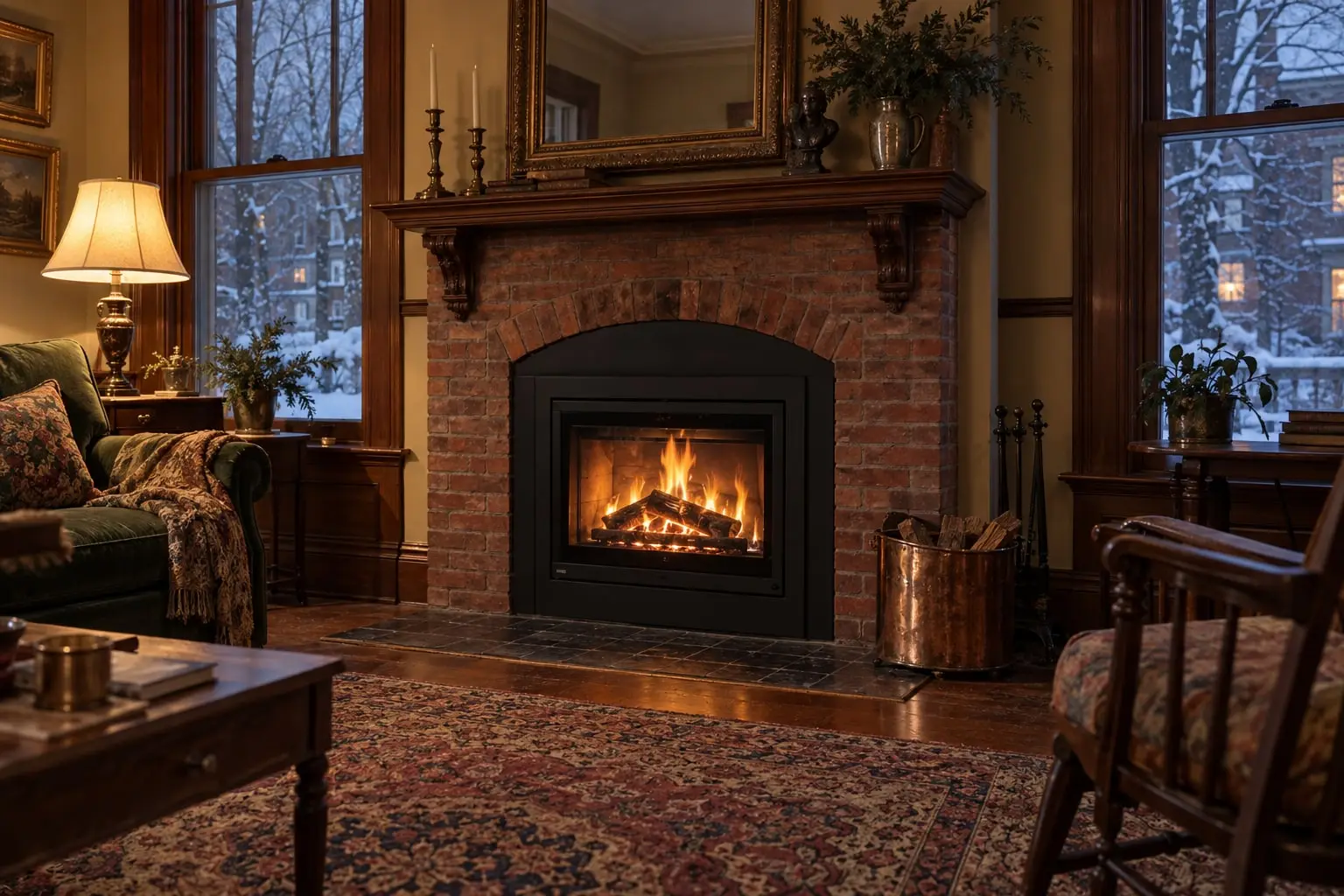
A clear flue draws better, so fires light easily, burn hotter and leave less smoke in the room and on the stove glass.
A clean room after
Drop cloths and a HEPA-filtered vacuum keep the soot inside the chimney and out of your living room.
Tips for better fires
Our customers tell us they learn something on every visit: how to build a cleaner fire, which wood to burn and how to set the air on their stove.
What every sweep includes
Whether it is an open fireplace or a stove, the visit follows the same steps.
- Hearth and floor covered before any tool comes out
- Flue brushed top to bottom with brushes sized to the liner
- Connector pipe on stoves and inserts taken down, swept and refitted
- Firebox, damper, smoke shelf and smoke chamber brushed out
- Nests and debris removed from the flue
- Cap and damper checked, with photos of anything worth showing you
- Hearth vacuumed and the room left as we found it
Stoves and inserts need a little more
A stove burns slower and cooler than an open fire, so it builds creosote faster, in the flue and in the connector pipe. While we sweep we also look at the parts that make a stove burn cleanly: door gaskets that seal the fire box, the catalytic combustor on stoves that have one, and the air wash that keeps the glass clear.
A worn gasket or a clogged combustor makes a stove smoky and hungry for wood. Replacing them is often what gets it burning hot and clean again.
Chimney sweep questions
How often does a wood stove need sweeping?
At least once a year, and more often if you heat with it all winter. Stoves build creosote faster than open fireplaces because they burn slower and cooler, especially when they are damped down overnight.
Will sweeping make a mess?
No. We cover the floor and furniture around the hearth and run a HEPA-filtered vacuum while we work, so the soot goes into our vacuum and not into the room.
Can you fix a stove whose glass keeps going black?
Often, yes. A sweep, a cleaned or adjusted air wash, a new door gasket and drier wood usually bring back clear glass. We look at all of them during the visit and explain what we find.
Do gas fireplaces need sweeping?
Gas does not leave creosote, but the vent still collects nests, debris and corrosion. That yearly check and clearing is our chimney cleaning service rather than a sweep.
When is the best time to book?
Late summer and early fall, before you need the fireplace. Once the first cold snap arrives in the Fox Valley, everyone calls at once and the earliest dates go quickly.
Other services we provide
Chimney cleaning
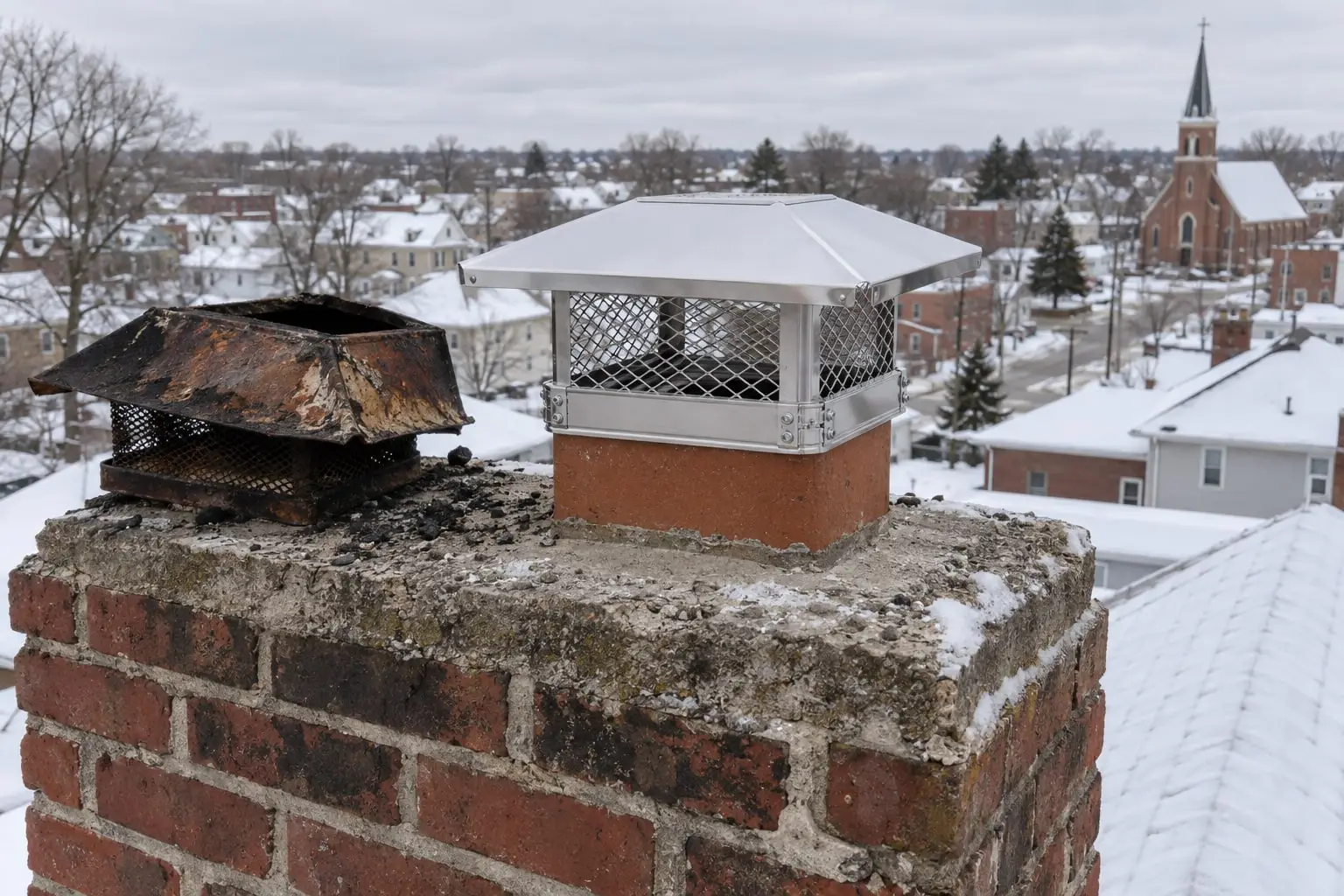
Clogged caps, blocked vents and nests cleared, so the chimney draws the way it should.
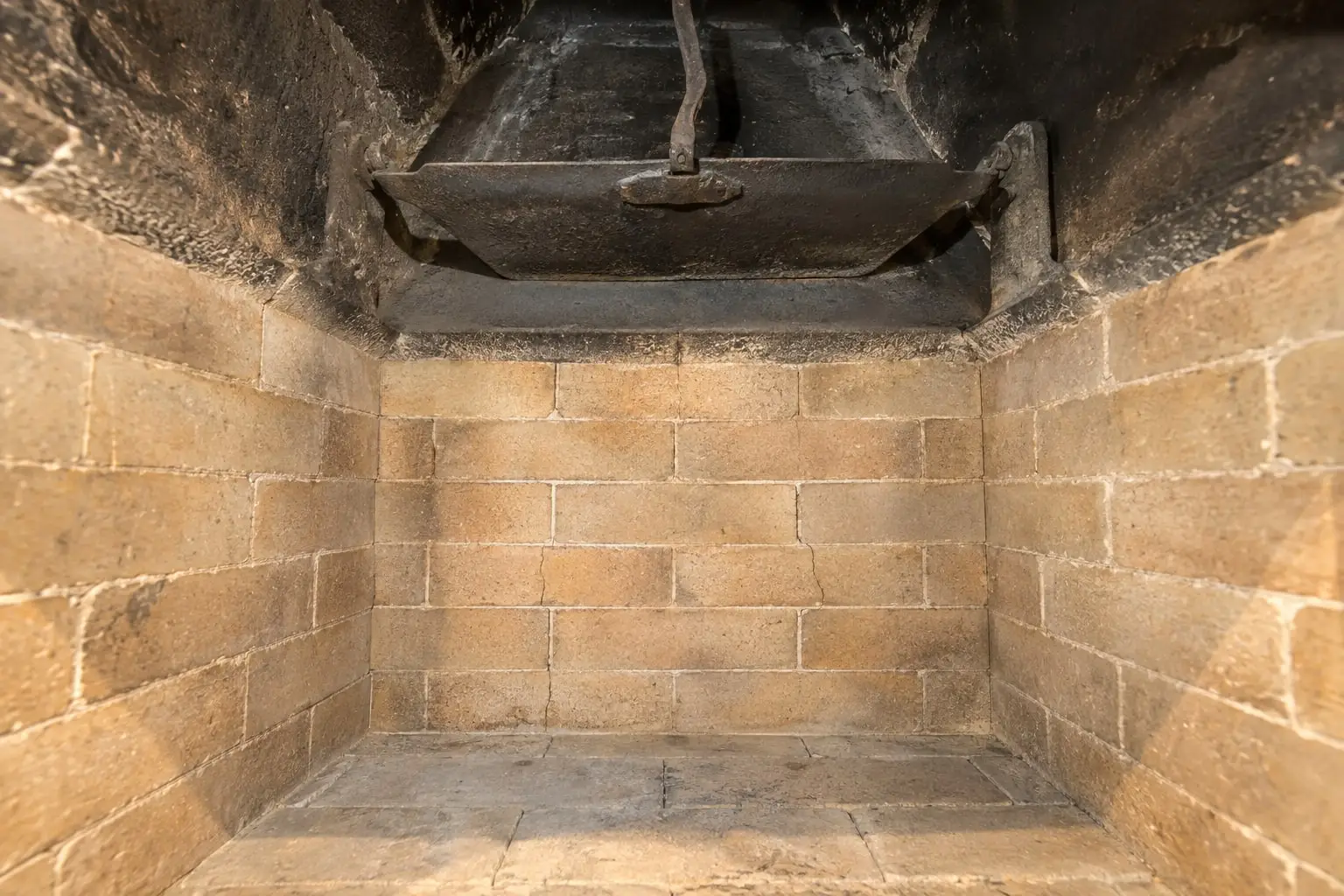
Chimney inspection
The whole system checked, from the cap and crown to the flue, damper and firebox, with photos.
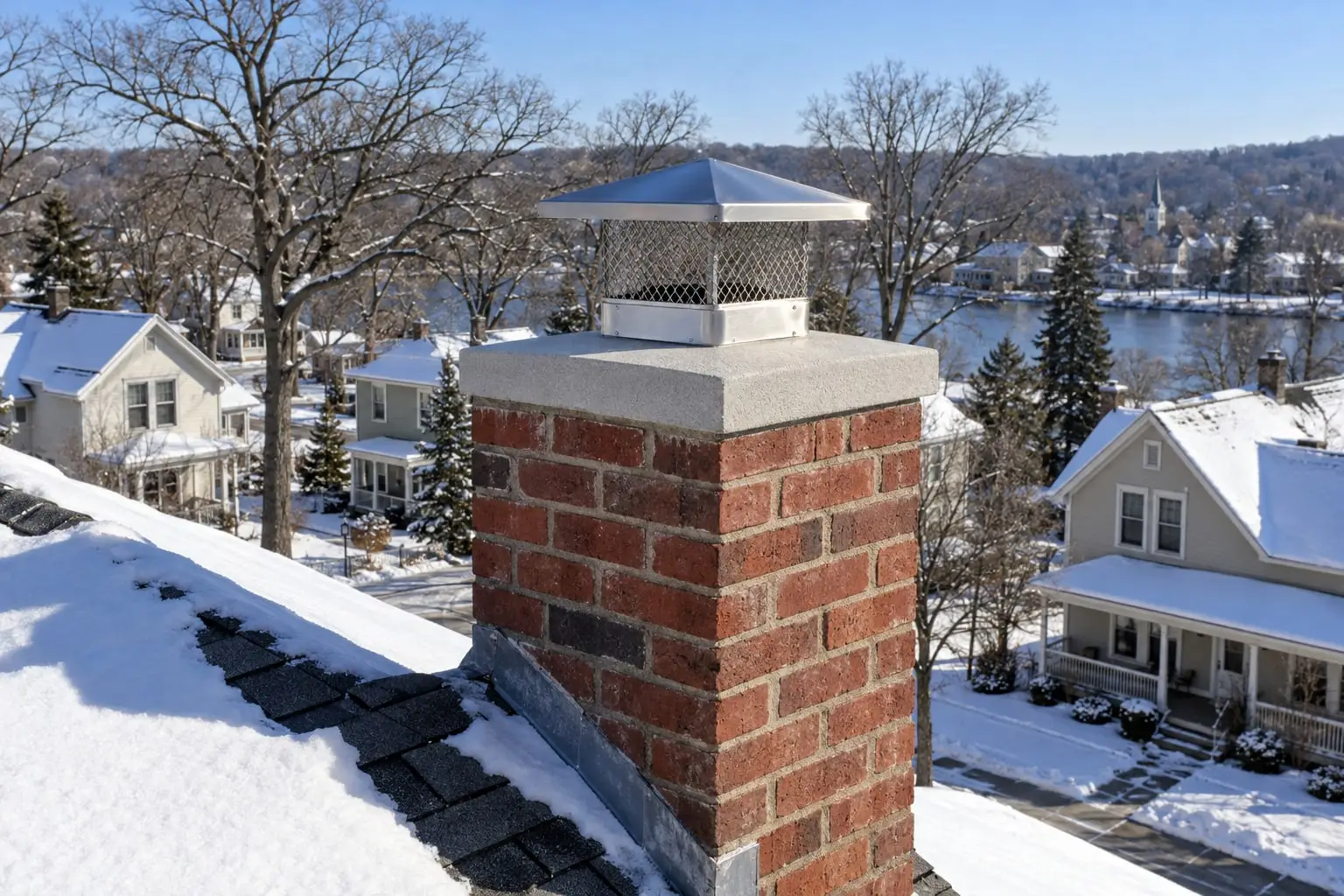
Chimney repair
Caps, flue pipes, crowns, flashing and brick repaired, so rain and frost stay out of the chimney.
Ready for clean, easy fires this winter?
Fireplace, stove or insert? Say which, leave a number, and we call you to book the visit.